The context for the Fourth Wave
The First Three Waves of Democracy
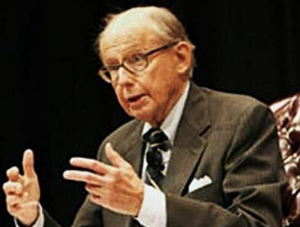
This idea was first advanced by Professor Samuel P. Huntington of Harvard in his 1991 book The Third Wave about democratization in the late 20th century. Huntington was a major force in political science and upon his death in 2008, The Guardian noted that “…by the 1980s, [Huntington was] the most cited political scientist in America on international relations.”
Huntington demonstrated that modern democracy had gone through three waves or time periods in which the number of countries that were becoming democracies surged and two periods in which democratic progress was reversed.
| The Three Waves of Democracy | ||
| Wave | Period | Democracies |
| First Wave | 1820 to 1921 | 33 |
| 1st reverse | 1922 to 1945 | 11 |
| Second Wave | 1945 to 1958 | 52 |
| 2nd reverse | 1958 to 1975 | 30 |
| Third Wave | 1975 to 2008 | 123 |
| 3rd reverse | 2009 to ? | ? |
First Wave of Democracy
1820s to 1921 – The number of democracies by his count increased from 1 to 33.
1st Reverse: 1922 to 1945 – Number dropped to 11.
Huntington argued this first reverse wave started with Mussolini overthrowing democracy in Italy in 1922 and then the same in Portugal in 1925. But others have argued that the first reverse started in 1929 with the stock market crash that led directly to the much more consequential overthrows of democratic governments in Germany and Japan, which in turn generated a World War that put democracy’s existence at stake.
Second Wave of Democracy
1945 to 1958 – The number increased to 52.
The democracies being on the winning side in WWII spurred another wave of democratization, powered in part by the positive examples of the postwar reconstruction of Germany and Japan.
2nd Reverse: 1958 to 1975 – Number dropped to 30.
The 2nd reverse began in 1958 with the overthrow of the democratic government in Pakistan by the military. This reverse wave was driven by the challenges of decolonization and the pressures of the Cold War.
Third Wave of Democracy
1975 to ? – Democracies had increased to 65 by the time Huntington’s 1991 book was written.
According to Huntington, the Third Wave began in 1975 with the overthrow of the dictatorship in Portugal (in power since 1925), and it seemed to be driven by a combination of events from inside what later became the European Union (including the switch of the Catholic church to support democracy), the failure of alternate political systems to deliver prosperity, and the fact that many of these countries had had some previous experience with attempting democracy during the first two waves.
The Third Wave and The End of History
Huntington made it very clear that he was not about predicting the future. Rather, his book provided a backward-looking conceptual framework to observe the movements of “democracy” over the last two centuries. Unlike Huntington, however, another lesser-known political scientist was not shying away from predicting the future. His name was Francis Fukuyama.

In 1989, two years before Huntington published his book, Fukuyama published a groundbreaking article entitled: The End of History. This became the single most influential and impactful political science article for the remainder of the 20th century. Fukuyama boldly predicted that “history”—defined as a battle between major ideas on how human societies should be governed—was over. He proclaimed, in essence, that “liberal democracy” had won that battle and would inevitably spread worldwide. He combined ideas from the German philosopher Friedrich Hegel, certain aspects of human nature connected to dignity, and some long-term historical trends as the fundamental basis for his argument and its explosive conclusion.
Two years later, Huntington’s book was published. During the rest of the 1990s, the size of the Third Wave continued to expand impressively; by the turn of the century there were, according to the Freedom House Democracy Index count, 120 democracies. It appeared the Third Wave framework was helping to confirm Fukuyama’s prediction, leading many to the optimistic belief that perhaps the Third Wave might be the last wave. This belief seemed to be supported by the evidence on the ground, so why not believe? To varying degrees many did.
When did the Third Wave end?
Various dates have been proposed, but two stand out:
2006
For those who favor a numerical approach, 2006 was the year when the Freedom House Democracy Index showed the highest number: 123.
2008
Perhaps a more sophisticated argument suggests 2008. This was the year that the world’s leading democracy nearly blew up the entire global financial system. That significantly eroded much of the belief that we possessed some magic unstoppable formula. This near catastrophe was then exacerbated by the fact that not a single wealthy financier was indicted for the massive fraud that caused this near global meltdown. Clearly, something was rotten at the core of the system. After 2008, nothing really went right again. For example:
- 2010 – The Arab Spring launched and then failed in nearly every country. In Syria and Yemen it failed catastrophically, eventually imploding both countries.
- 2012 – The Chinese installed their first one-man dictatorship since Mao Tse Tung.
- 2014 – Ukraine deposed its pro-Russian strongman and Putin took Crimea in response. The principle that dictators could successfully take land by armed force was reestablished.
The fundamental problem was less about dictators getting stronger and more about democracy getting weaker. In September 2014, in an interview with The New York Times, Fukuyama summed his view of the current direction in America:
“Over the past few decades, American political development has gone into reverse, Fukuyama says, as its state has become weaker, less efficient and more corrupt. One cause is growing economic inequality and concentration of wealth, which has allowed elites to purchase immense political power and manipulate the system to further their own interests.”
Even Fukuyama seemed to understand that the end of history was probably over, and seemed to acknowledge that growing elite corruption in the heart of the American political system was probably why. His original 1989 analysis had unfortunately missed that threat to democratic inevitability.
What happened to the Third Wave (and the End of History)?
Democracy is the Ferrari of political decision-making systems. It is the most powerful political system humankind ever invented. During the Third Wave, however, even the very best among us were like young teenagers handed the keys to the Ferrari without understanding how to drive a vehicle that powerful. As a result, we crashed the car.
This time, in the Fourth Wave, the very best of us will have attended Ferrari-driving school. And the outcome will be different.
The Ferrari Training List and the Fourth Wave
Some of the fundamental concepts we failed to teach during the Third Wave, and therefore doomed it:
- Democracy is a psychological phenomenon first, and a political phenomenon second.
- Democracy is a political/economic system and the two cannot be separated.
- Democracy is a trend not a destination, so thorough knowledge of its history is essential.
- Democracy has two major enemies, and during the Third Wave we only identified one.
- Democracy has a decision-making theory that did not even have a name during the Third Wave.
—
Welcome to the Democracy Power Course—where you can learn how to contribute to the Fourth Wave.